
Services

Social Services Staff Development
|
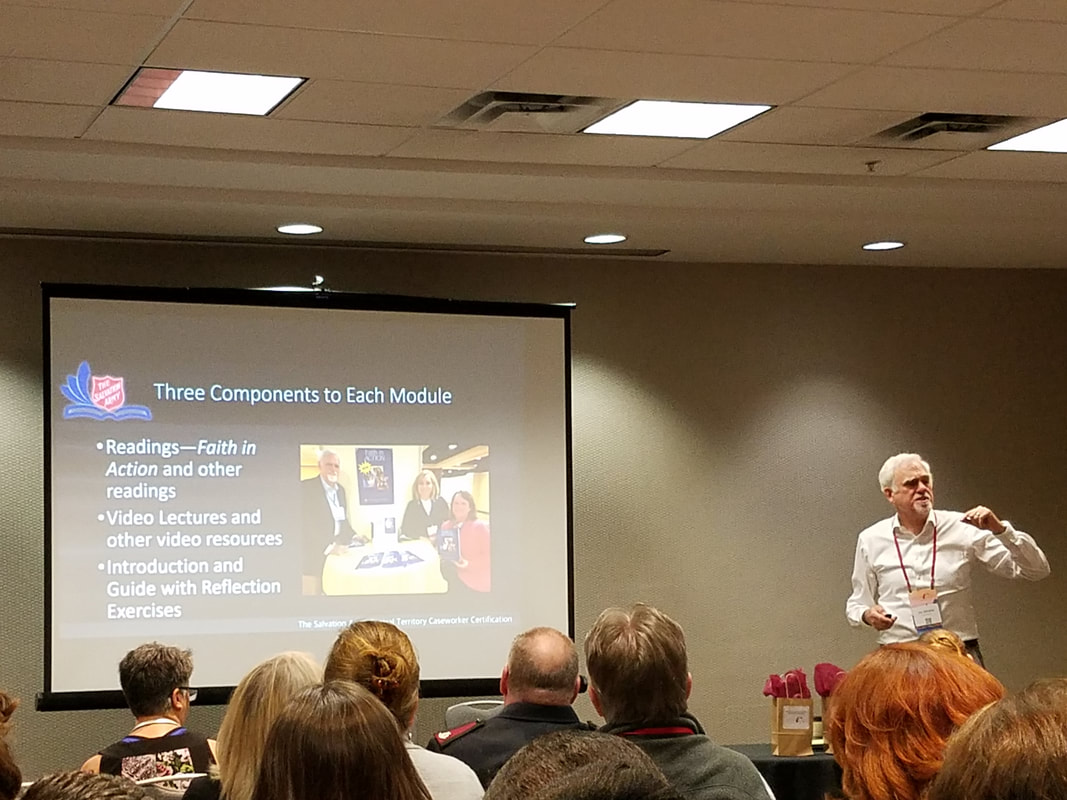
Dr. Jim Winship has presented at our annual Salvation Army Social Service Conference for a number of years. His presentations are always sought after by staff and participants often schedule what workshops to attend only after selecting his workshops. We are always assured his content is informative and pertinent to our topics. His delivery is such that participants remain engaged and often list him as their first request for the next conference. |
Dr. Jim Winship designs and presents staff development / training experiences in a variety of formats, including two hour workshops, half-day, and full day training experiences. He has experience in Instructional Design and online educational instruction, and develops learning experiences with measurable outcomes.
Early in his professional career, he designed and delivered training for four years at the Office of Continuing Social Work Education at the University of Georgia. Over his professional career, he has developed training materials and presented workshops for organizations that include The Salvation Army, Atlanta Task Force on the Homelessness, and the State of Wisconsin Bureau of Housing on topics that include effective case management, culturally competent social work practice, working with immigrant families, and working with homeless families.
RECENT PROJECTS:
Jim serves as a content developer and consultant with the Central Territory of The Salvation Army Social Services in the design, implementation, and further development of their Caseworker Certification Program, a staff development initiative that is being implemented nationwide. He delivered webinars in 2020 for The Salvation Army Social Services in Wisconsin and Upper Michigan Division on creative responses to Covid-19 and for the University of Wisconsin-Whitewater on dealing with anxiety during this unparalleled time. He In 2017, he conducted workshops for The Salvation Army Social Services in Chicago, Illinois and for the Northwoods Division (upper Minnesota and North Dakota) of the Central Territory. He conducted nine webinars for The Salvation Army Social Services in Wisconsin and Upper Michigan Division from 2014-2020.
Early in his professional career, he designed and delivered training for four years at the Office of Continuing Social Work Education at the University of Georgia. Over his professional career, he has developed training materials and presented workshops for organizations that include The Salvation Army, Atlanta Task Force on the Homelessness, and the State of Wisconsin Bureau of Housing on topics that include effective case management, culturally competent social work practice, working with immigrant families, and working with homeless families.
RECENT PROJECTS:
Jim serves as a content developer and consultant with the Central Territory of The Salvation Army Social Services in the design, implementation, and further development of their Caseworker Certification Program, a staff development initiative that is being implemented nationwide. He delivered webinars in 2020 for The Salvation Army Social Services in Wisconsin and Upper Michigan Division on creative responses to Covid-19 and for the University of Wisconsin-Whitewater on dealing with anxiety during this unparalleled time. He In 2017, he conducted workshops for The Salvation Army Social Services in Chicago, Illinois and for the Northwoods Division (upper Minnesota and North Dakota) of the Central Territory. He conducted nine webinars for The Salvation Army Social Services in Wisconsin and Upper Michigan Division from 2014-2020.
strategic story communication, Digital Storytelling, Documentary
Jim Winship's first documentary was Difficult Dreams: Coming of Age in El Salvador, which he made while a Fulbright Scholar in that country.
He directed and co-produced the documentary What We’re Hungry For: How Food Pantries Fed Rural Wisconsin During the Pandemic. The expanded trailer is at https://vimeo.com/498142539/1e3d0a9745
A brief description: Documenting the response of five local Wisconsin food pantries to the unprecedented needs created by the coronavirus pandemic, this film tells the story of the hard work, ingenuity, and compassion of these organizations while also exploring the complex and longstanding challenges of fighting hunger in rural America. The film is primarily told through the words of those who are on the front lines every day. We talk to Marty Lee, a 62-year-old woman who during the pandemic created a brand new mobile pantry system from scratch to serve nine towns in the rural "food desert" of Waushara County. We spend time with Marlon Skenandore, director of the Oneida Emergency Food Pantry, where a close-knit agricultural community provides a uniquely holistic alternative to the traditional model of corporate donations among food pantries. The stories of these and several other remarkable individuals reveal the vital role their efforts play in the wellbeing of their communities, the benefits and drawbacks of the federal government's response to hunger during the pandemic, and the stigma and misconceptions surrounding hunger in rural areas.
Through the Waushara County Food Pantry, Jim is producing and directing an upcoming documentary: Growing Older in a Rural Wisconsin County, partially supported by a grant from the Wisconsin Humanities Council.
Jim Winship's services include helping organizations and groups with strategic story communication, engaging them in a process of determining how they can use story (in both digital and print versions) as part of the organization's strategic communication strategy. In 2019, Jim has been working with the Waisman Center at the University of Wisconsin-Madison, a national leader in early childhood disabilities and autism, in not only helping them shape their strategic communication but also helping staff enhance their capabilities in constructing and producing stories. In the fall of 2019, he presented on the strategic use of stories at a meeting of the Maternal and Child Environmental Health Collaborative Network project, a national collaborative which aims to build state capacity to improve systems of care to address the needs of maternal, infant and child populations that are at risk for or experience exposure to lead.
Jim presented the workshop "Promoting Change and Generating Support Through Clients' Digital Stories" at The Salvation Army National Social Services Conference in Kansas City in April, 2019. In 2018-19, he presented at six professional conferences on the use of story for advocacy and community awareness purposes, including the Poverty Matters Conference in Milwaukee, WI, the Wisconsin National Association of Social Workers Annual Conference, at regional and Wisconsin Salvation Army Social Services conferences, and DC at the annual conference of the Northlands Storytelling Network.
Since 2018, Jim has been working with Bethel House, Inc. of Whitewater, Wisconsin in the development of digital stories which that organization uses for community awareness and development purposes. Two of those can be seen at bethelhouseinc.org. He is currently spearheading the development of a financial management curriculum for low-income families--Money Well-Being, which, after field testing, will be made available by Bethel House to other nonprofit organizations in 2021.
For over a decade, he has led three-day workshops in which individuals learn to develop their own digital stories, personal two to four-minute personal stories. They are meaningful to the person creating them, and can also be used for public awareness and organization communication. Examples of digital stories can be found in this site's blog.
PAST PROJECTS:
Jim has developed five short locative (location-based) digital stories featured on the StriveOn mobile app in the Whitewater Locative Digital Storytelling Project. Used to engage people and communities, locative stories and the StriveOn app adds context to places and localities. A description of the project and one of the digital stories can be found in Storying the Human Experience blog on this site, titled: "If Only These Walls Could Talk; Well, They Can."
In August 2017, through Frontier Health, Inc. in East Tennessee, he conducted a three-day digital storytelling workshop with a group of women in recovery from drug addiction and alcoholism, assisting each of them in developing her own story as a part of the rehabilitative process. One of the participants wrote in her evaluation of the story she created: "I hope to one day be a voice for domestic violence for women. This is amazing."
He directed and co-produced the documentary What We’re Hungry For: How Food Pantries Fed Rural Wisconsin During the Pandemic. The expanded trailer is at https://vimeo.com/498142539/1e3d0a9745
A brief description: Documenting the response of five local Wisconsin food pantries to the unprecedented needs created by the coronavirus pandemic, this film tells the story of the hard work, ingenuity, and compassion of these organizations while also exploring the complex and longstanding challenges of fighting hunger in rural America. The film is primarily told through the words of those who are on the front lines every day. We talk to Marty Lee, a 62-year-old woman who during the pandemic created a brand new mobile pantry system from scratch to serve nine towns in the rural "food desert" of Waushara County. We spend time with Marlon Skenandore, director of the Oneida Emergency Food Pantry, where a close-knit agricultural community provides a uniquely holistic alternative to the traditional model of corporate donations among food pantries. The stories of these and several other remarkable individuals reveal the vital role their efforts play in the wellbeing of their communities, the benefits and drawbacks of the federal government's response to hunger during the pandemic, and the stigma and misconceptions surrounding hunger in rural areas.
Through the Waushara County Food Pantry, Jim is producing and directing an upcoming documentary: Growing Older in a Rural Wisconsin County, partially supported by a grant from the Wisconsin Humanities Council.
Jim Winship's services include helping organizations and groups with strategic story communication, engaging them in a process of determining how they can use story (in both digital and print versions) as part of the organization's strategic communication strategy. In 2019, Jim has been working with the Waisman Center at the University of Wisconsin-Madison, a national leader in early childhood disabilities and autism, in not only helping them shape their strategic communication but also helping staff enhance their capabilities in constructing and producing stories. In the fall of 2019, he presented on the strategic use of stories at a meeting of the Maternal and Child Environmental Health Collaborative Network project, a national collaborative which aims to build state capacity to improve systems of care to address the needs of maternal, infant and child populations that are at risk for or experience exposure to lead.
Jim presented the workshop "Promoting Change and Generating Support Through Clients' Digital Stories" at The Salvation Army National Social Services Conference in Kansas City in April, 2019. In 2018-19, he presented at six professional conferences on the use of story for advocacy and community awareness purposes, including the Poverty Matters Conference in Milwaukee, WI, the Wisconsin National Association of Social Workers Annual Conference, at regional and Wisconsin Salvation Army Social Services conferences, and DC at the annual conference of the Northlands Storytelling Network.
Since 2018, Jim has been working with Bethel House, Inc. of Whitewater, Wisconsin in the development of digital stories which that organization uses for community awareness and development purposes. Two of those can be seen at bethelhouseinc.org. He is currently spearheading the development of a financial management curriculum for low-income families--Money Well-Being, which, after field testing, will be made available by Bethel House to other nonprofit organizations in 2021.
For over a decade, he has led three-day workshops in which individuals learn to develop their own digital stories, personal two to four-minute personal stories. They are meaningful to the person creating them, and can also be used for public awareness and organization communication. Examples of digital stories can be found in this site's blog.
PAST PROJECTS:
Jim has developed five short locative (location-based) digital stories featured on the StriveOn mobile app in the Whitewater Locative Digital Storytelling Project. Used to engage people and communities, locative stories and the StriveOn app adds context to places and localities. A description of the project and one of the digital stories can be found in Storying the Human Experience blog on this site, titled: "If Only These Walls Could Talk; Well, They Can."
In August 2017, through Frontier Health, Inc. in East Tennessee, he conducted a three-day digital storytelling workshop with a group of women in recovery from drug addiction and alcoholism, assisting each of them in developing her own story as a part of the rehabilitative process. One of the participants wrote in her evaluation of the story she created: "I hope to one day be a voice for domestic violence for women. This is amazing."
Story-Based Presentations and Public Speaking
|
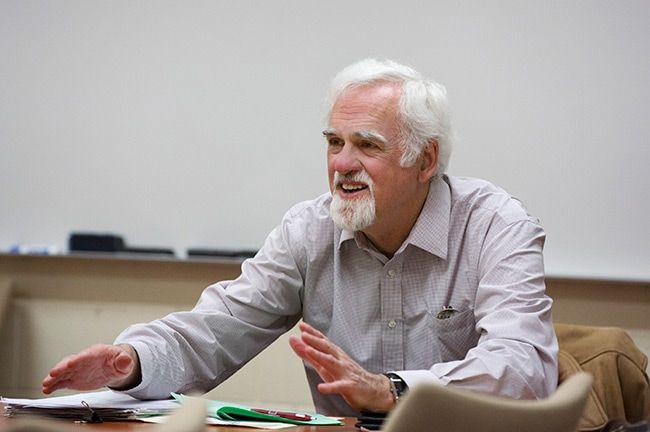
Dr. Winship brought to life the value and joy in remembering and sharing our family stories! The two family programs I serve at St. Joan of Arc in Nashotah, WI and St. Catherine of Alexandria in Oconomowoc, WI deeply enjoyed Dr. Winship's ease and captivating presentation. The telling of his own family stories encouraged all to look deeper into their own. The exercises he gave the groups were the favorites of the year! |
Jim Winship was a featured speaker on Wisconsin Humanities Council Speaker's Bureau for a number of years. He has spoken to a range of community and church groups. His presentation style incorporates both animated storytelling -- his own stories, stories of those he has worked with, and traditional stories -- and the perspectives that he has acquired through a wide range of life experiences: as a parent, a social worker, a college professor in the United States, a Fulbright Scholar in Colombia and El Salvador, and as an elected official.
As a professional storyteller, he has performed in libraries, schools, and bookstores, as well as at storytelling conferences in the Upper Midwest and professional conferences. In January, 2018, Jim presented an hour-long story program on El Salvador and migration for the Conversation Cafe at Stage Left Cafe in Woodstock, Illinois.
As a professional storyteller, he has performed in libraries, schools, and bookstores, as well as at storytelling conferences in the Upper Midwest and professional conferences. In January, 2018, Jim presented an hour-long story program on El Salvador and migration for the Conversation Cafe at Stage Left Cafe in Woodstock, Illinois.